
What Desk and Room Occupancy Data Actually Tells You (That a Headcount Doesn’t)
A common planning mistake: using headcount as a proxy for space need. “We have 80 employees, so we need 80 desks” sounds reasonable, but it consistently produces the wrong answer, because headcount tells you how many people you have, not how your space is actually being used day to day.
What Headcount Doesn’t Tell You
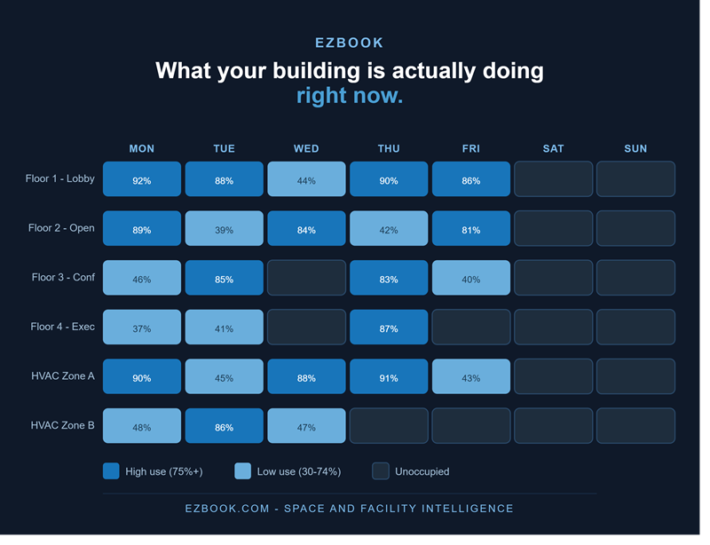
Headcount is a snapshot of who’s on payroll. It says nothing about hybrid schedules, which days people are actually in the office, which teams cluster their in-office days together, or which spaces sit empty most of the week while others are consistently overbooked.
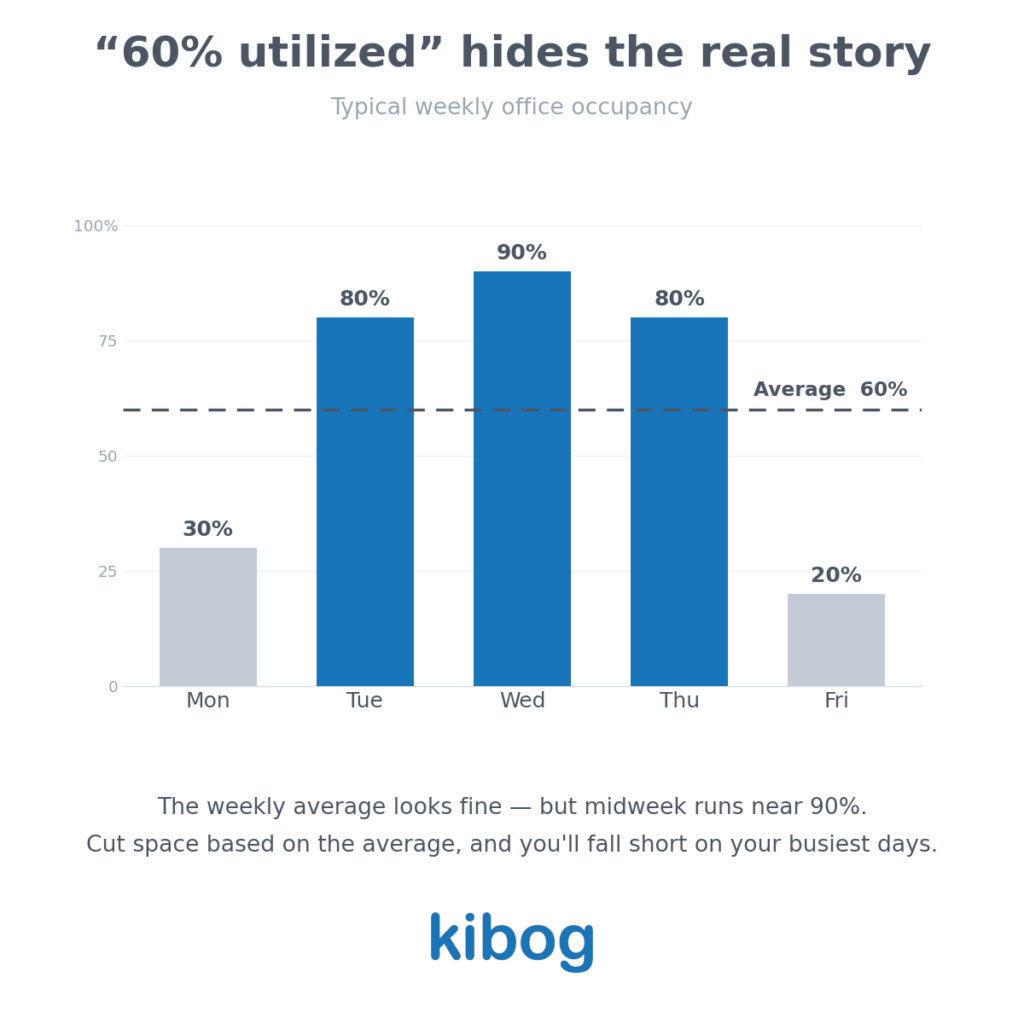
A company with 80 employees on a hybrid schedule might genuinely need 45 desks on a typical Tuesday and 60 on a Thursday, numbers that headcount alone will never reveal.
What Occupancy Data Actually Shows
Real desk and room usage data, tracked over weeks rather than guessed at, answers the questions that actually matter for space planning:
Which days see the highest actual occupancy, and by how much does that vary from the lowest day?
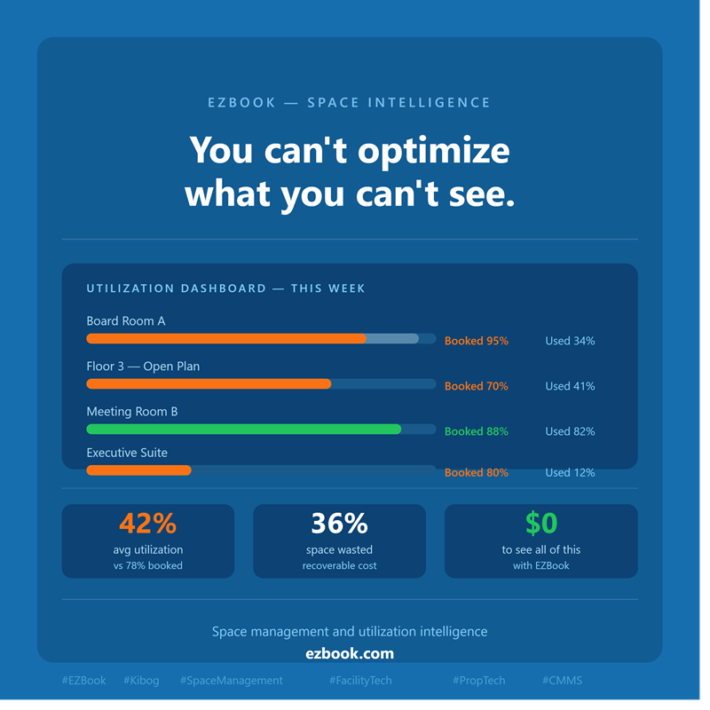
Which meeting rooms are genuinely in demand versus which ones are booked out of habit but rarely used?
Are certain teams consistently under-provisioned for space while others have more than they use?
Is the office overall over-provisioned relative to actual usage, a real, common finding once teams look at real data instead of assumptions?
Why This Matters Beyond Just Cost Savings
Reducing unused space is the obvious benefit, but the data also improves the experience for the people actually coming in. Nobody wants to walk into an office and struggle to find a desk or a meeting room on a day when usage data would have predicted exactly that crunch. Good occupancy data lets facility and workplace teams get ahead of both problems, wasted space and inadequate space, at the same time, rather than guessing and hoping.
Where This Fits Into a Broader Facility Strategy
Space utilization data doesn’t exist in isolation, it’s most useful when it connects to the same platform managing work orders, asset history, and facility operations broadly, rather than living in a separate disconnected tool. This is the direction EZBook’s space management foundation is evolving toward as part of Kibog’s broader work-order and CMMS platform.
Curious what your actual occupancy patterns look like, not just your headcount? Talk to our team about what real space utilization data could reveal for your office.
Explore more: Advisory